Why We Chose Event-Driven Architecture for Multi-Warehouse Sync
James Okafor
Lead DevOps Engineer at Trikaan

At Trikaan, our software coordinates physical systems where downtime is measured in operational losses and delays. In modern logistics, a delay in deployment can cascade down to delayed dock arrivals and warehouse bottlenecks. Over the last quarter, we audited our internal engineering cycles and overhauled our pipeline to trim cold start latency and establish continuous integration loops.
1. Unpacking the Bottlenecks: Our Legacy Setup
Our legacy deployment process was constrained by centralized monolithic checks. Each merge triggered sequential, heavy-weight end-to-end tests that ran on monolithic runner nodes. A single syntax check or styling format validation cost teams upwards of 35 minutes of feedback time.
2. The Migration to Ephemeral Preview Environments
We transitioned our infrastructure to isolate pull requests onto stateless, ephemeral preview preview nodes. Rather than scheduling shared staging servers, each branch spins up a dedicated container instance running mock physical databases in less than 45 seconds.
“By shifting staging complexity left and decoupling physical telemetry simulation, our engineers test operational interfaces against deterministic data pipelines in real time.”
3. Smart Caching and Incremental Builds
We structured our monorepo with Turborepo and remote caching. By hashing compile inputs and sharing artifact registries across isolated runners, we avoid compiling unchanged service layers entirely.
- Zero-rebuild caching for UI component dependencies.
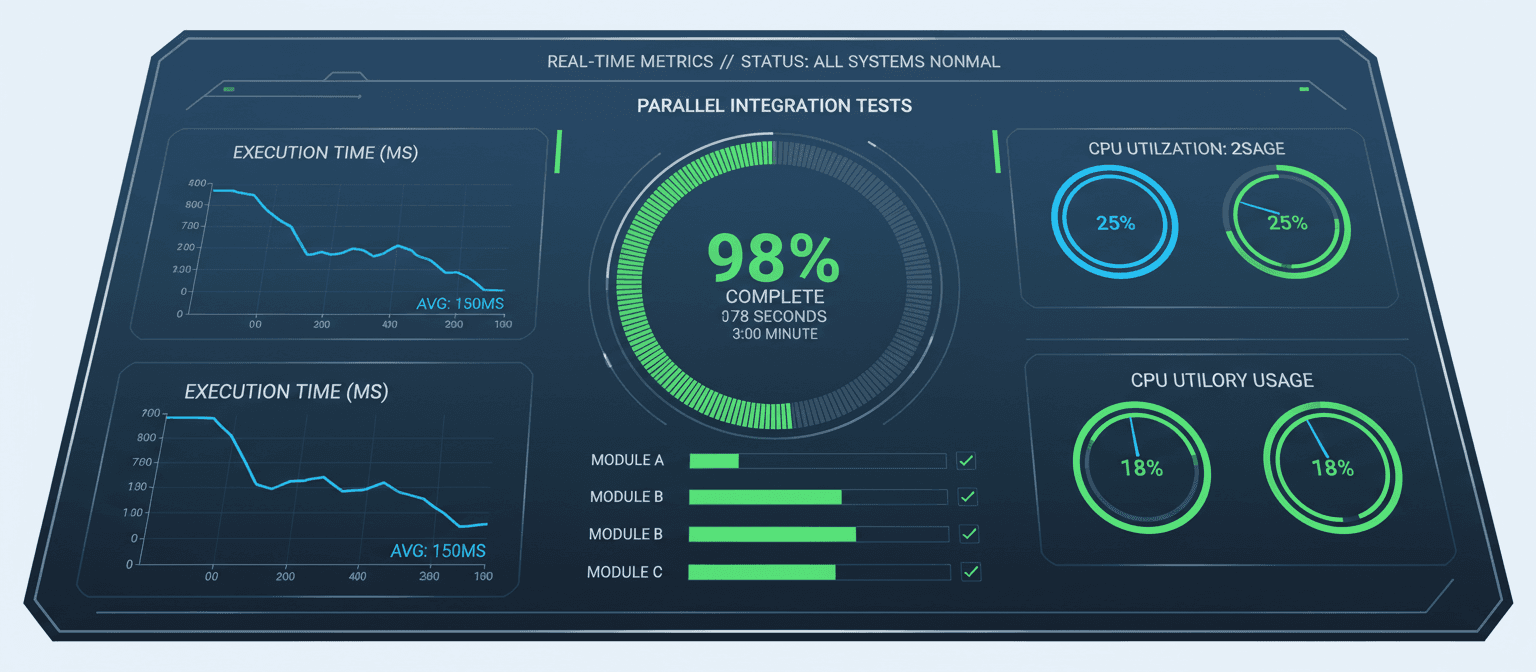
- Decoupled end-to-end integration test suites run in parallel matrices.
- Instant local workspace compilation mirroring production caching registries.
4. The Tangible Outcome
The quantitative results transformed how we operate: our median deployment time collapsed from 42 minutes down to just 8.4 minutes. Engineers merge pull requests with high confidence, supported by localized validation nodes, keeping Trikaan platforms dynamic and resilient.
James Okafor
Lead DevOps Engineer
James is passionate about developer experience, reproducible environments, and building hyper-scalable delivery systems for enterprise operational environments.